

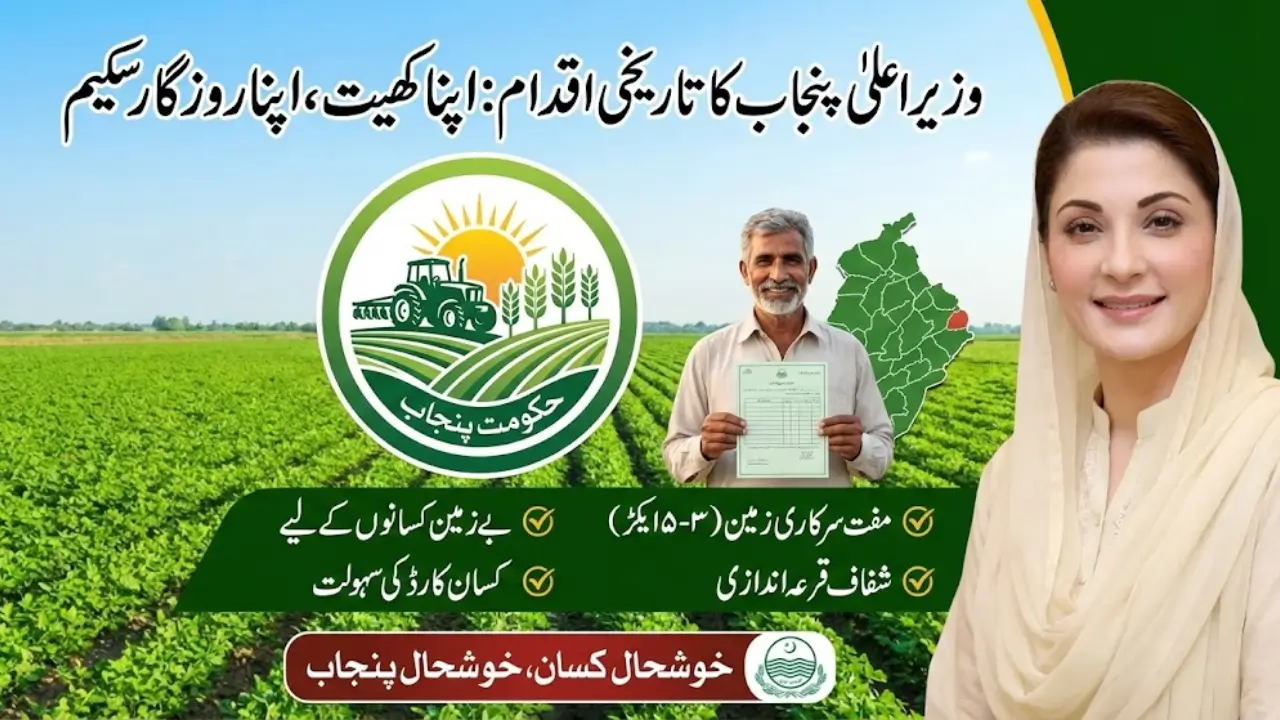
Apna Khet Apna Rozgar is a major rural empowerment initiative launched by the Government of Punjab to provide land ownership to landless citizens. The main objective of this scheme is to transform unemployed and underprivileged individuals into self-employed farmers by giving them access to government-owned agricultural land.
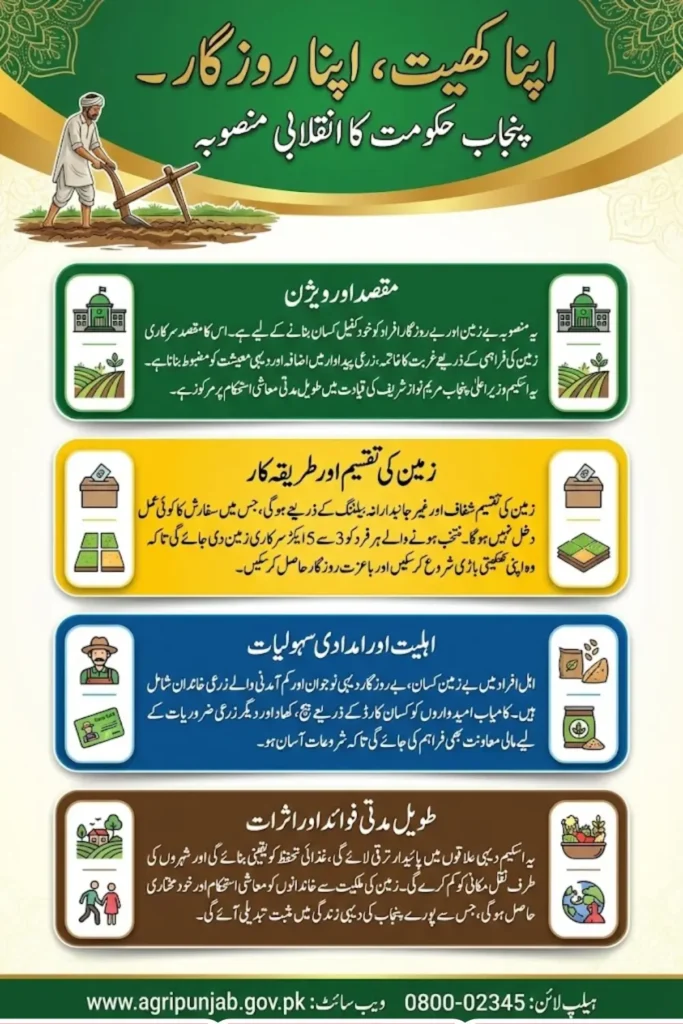
Unlike past welfare programs that focused on short-term financial assistance, this scheme emphasizes long-term economic stability. By enabling people to earn through farming, the government aims to reduce poverty, increase agricultural production, and strengthen rural livelihoods across Punjab.
Vision Behind Apna Khet Apna Rozgar
The vision of apna khet apna rozgar is based on the belief that land ownership creates responsibility, dignity, and independence. The scheme encourages people to work on their own land rather than relying on ongoing government aid. This approach promotes self-reliance and productive engagement in agriculture.
You can also read: Important News | Prime Minister Relief Package
Introduced under the leadership of Maryam Nawaz Sharif, the initiative aligns with broader goals of rural development and food security. It reflects a shift toward sustainable solutions that empower individuals to build their own future through effort and skill.
Total Land Allocation Under the Scheme
A key strength of apna khet apna rozgar is the large amount of land allocated for distribution. The Punjab government has dedicated a significant portion of state-owned land to ensure that the scheme delivers real and measurable impact.
This allocation allows thousands of families to benefit while also increasing the amount of cultivated land. Bringing unused or underutilized land into productive use supports food availability and strengthens the agricultural economy of the province.
Distribution Method – How Balloting Works
Land under apna khet apna rozgar will be distributed through a transparent and official balloting system. This method ensures that every eligible applicant has an equal chance of selection, without favoritism or external influence.
The balloting process is one of the most trusted aspects of the scheme. It eliminates recommendations and shortcuts, making the program more credible and fair compared to many earlier initiatives.
Key features of the distribution method include:
- Selection through official balloting only
- Equal opportunity for all eligible applicants
- No political or personal influence
- Transparent and documented process
Target Beneficiaries of Apna Khet Apna Rozgar
The scheme is designed for a specific group of people who are ready to work and benefit from land ownership. It is intentionally not open to everyone, ensuring that resources reach those who genuinely need them.
Apna khet apna rozgar focuses on individuals who can actively cultivate land and generate income through farming. The target of 50,000 beneficiaries reflects careful planning and realistic implementation goals.
Main target beneficiaries include:
- Landless farmers
- Unemployed rural youth
- Low-income families with farming background
- Individuals willing to cultivate land themselves
Land Per Person – How Much Will Each Beneficiary Get
Each selected beneficiary will receive a limited but practical portion of land. This ensures fair distribution while allowing farming activities to remain economically viable for each household.
The land size is structured to prevent land concentration and to ensure that the maximum number of families can benefit from the scheme.
Land allocation details are:
- Minimum allocation of 3 acres
- Maximum allocation of 5 acres
- No individual will receive more than 5 acres
This size is considered suitable for income-generating farming when managed properly.
You can also read: 8070 Web Portal Muft Atta
Apna Khet Apna Rozgar Scheme Overview
| Category | Details |
|---|---|
| Total State Land | 250,000 acres |
| Distribution Method | Balloting system |
| Land Per Person | 3 to 5 acres |
| Target Beneficiaries | 50,000 individuals |
| Cost | Free government land |
| Purpose | Farming and self-employment |
| Province | Punjab |
Supporting Facilities for New Farmers
Understanding that land alone is not enough, the scheme is linked with additional support through the Kisan Card. This support helps new farmers manage initial expenses and begin cultivation without financial pressure.
The Kisan Card provides access to essential agricultural inputs, allowing beneficiaries to focus on productivity rather than upfront costs.
Support includes:
- Assistance for purchasing seeds
- Help with fertilizers
- Access to basic farming inputs
This support system increases the chances of success, especially during the first farming seasons.
Responsibilities After Land Allotment
Beneficiaries of apna khet apna rozgar are expected to use the allotted land responsibly. The land must be used strictly for agricultural purposes, and all government guidelines must be followed.
After allotment, farmers are encouraged to work with local agriculture departments. Training, guidance, and technical support are expected to help beneficiaries improve yields and adopt sustainable farming practices.
Expected Long-Term Impact on Rural Punjab
If implemented transparently, apna khet apna rozgar can bring lasting improvements to rural Punjab. Increased cultivation will boost food production, while self-employment will reduce rural unemployment.
Over time, the scheme can strengthen village economies, reduce migration to cities, and create stable income sources for thousands of families. Land-based employment offers long-term security that temporary job programs often fail to provide.
You can also read: Ramzan Nighban Program 2026
Conclusion
Apna Khet Apna Rozgar Scheme represents a long-term development vision rather than a short-term promise. With a large land allocation, fair balloting system, clearly defined beneficiaries, and agricultural support, the foundation of the scheme is strong.
Its success will ultimately depend on transparency, monitoring, and consistent implementation. If executed honestly, this initiative has the potential to become one of the most meaningful rural development programs in Punjab’s recent history.