

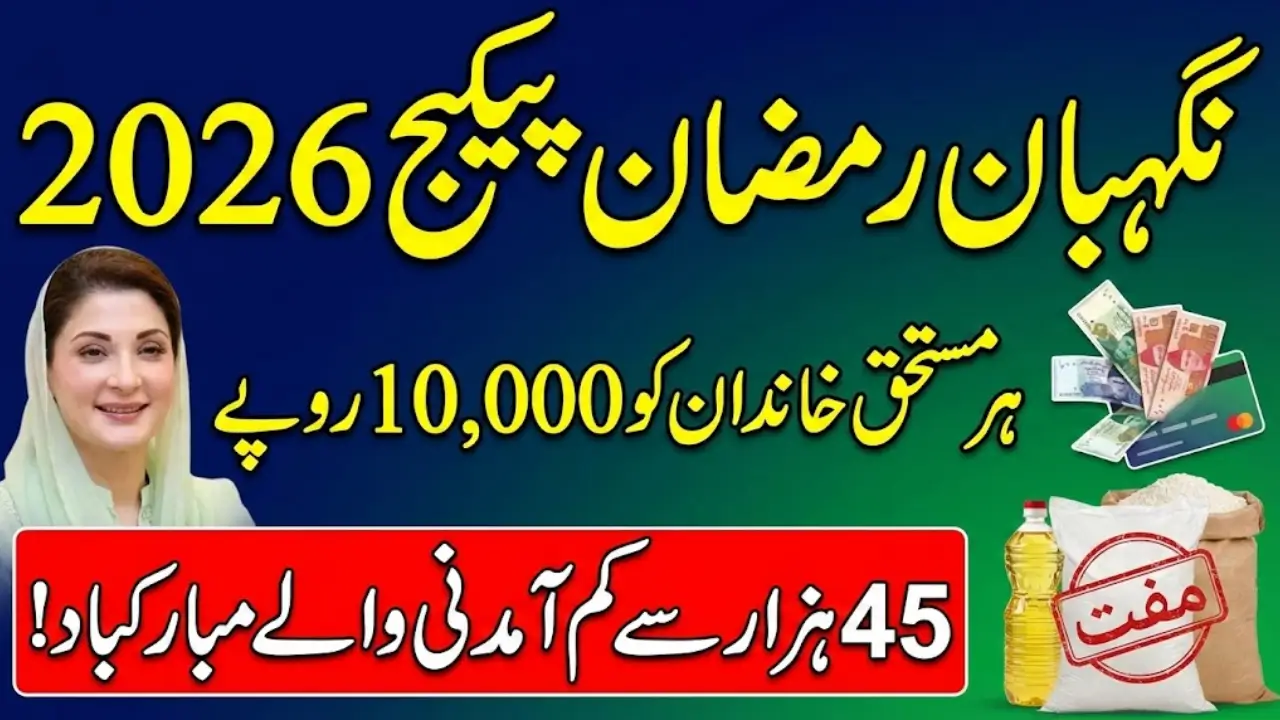
The Punjab Government has introduced the Nigehban Ramzan Package 2026 to support low-income families during the holy month of Ramzan. Rising inflation and increasing food prices have made it difficult for many households to manage basic needs, especially during Ramzan. This relief package aims to reduce that burden through direct financial support and subsidized food items.
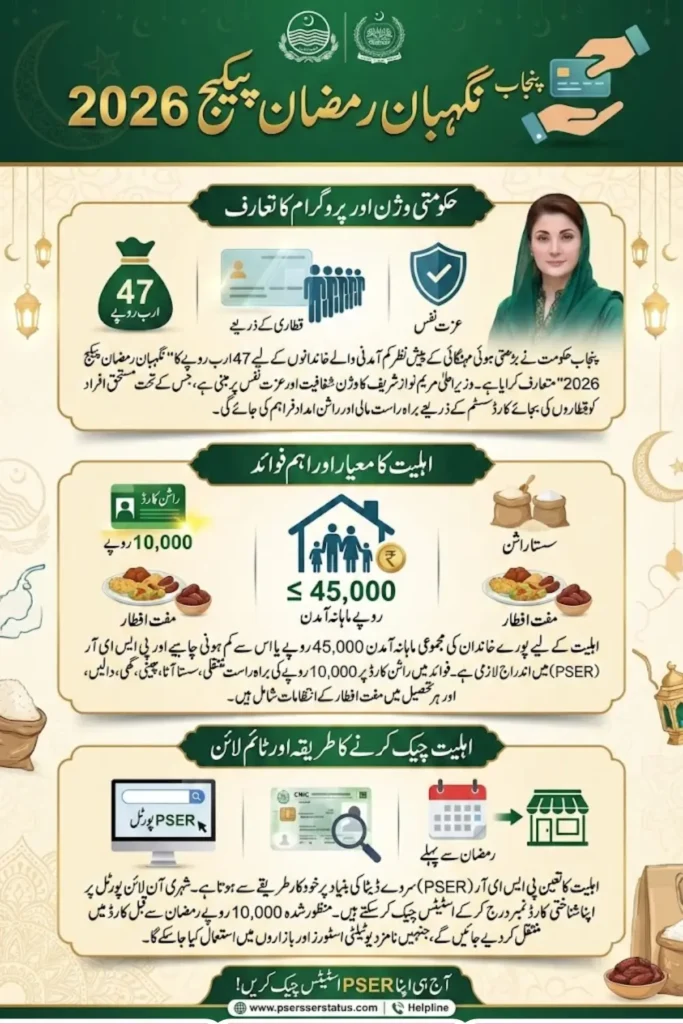
With a total budget of Rs. 47 billion, the program focuses on transparency, dignity, and targeted assistance. Instead of long queues or cash handouts, the government has adopted a card-based system that ensures deserving families receive help directly.
Government Vision Behind the Nigehban Ramzan Package
Chief Minister Maryam Nawaz Sharif launched this initiative with the goal of protecting vulnerable families from economic pressure during Ramzan. The program is structured to reach households that genuinely need assistance rather than distributing aid without verification.
The government is using verified socio-economic data to identify beneficiaries. This approach helps eliminate duplication, favoritism, and misuse of public funds, while ensuring that help reaches the right people at the right time.
Monthly Income Requirement Explained Clearly
The most important eligibility factor for the Punjab Ramzan Package 2026 is the monthly household income limit. Families must fall within this limit to qualify for financial and food assistance.
You can also read: Readinfos Ramzan Package 2026
The income condition is simple but strict. The government checks combined earnings rather than individual salaries, which helps identify families struggling as a whole.
Income criteria includes:
- Total combined income of all earning family members
- Salary, daily wages, and informal earnings
- Pensions or regular government support
- Income details provided during the PSER survey
If a household’s total monthly income exceeds Rs. 45,000, it will not qualify for the program.
Who Can Qualify for the Punjab Ramzan Package 2026
Eligibility is not limited to one profession or job type. The program covers a wide range of low-income groups across Punjab who meet the income and residency requirements.
You may qualify if:
- Your household income is Rs. 45,000 or below
- You live permanently in Punjab province
- Your family data is registered in the Punjab Socio-Economic Registry (PSER)
- You already hold a Maryam Nawaz Rashan or Nigehban Card
- You work as a daily wage laborer, sanitation worker, or miner under government programs
Meeting all conditions increases the chances of approval, especially if your PSER data is complete and accurate.
Benefits Offered Under the Ramzan Relief Program
The Punjab Ramzan Package 2026 goes beyond basic ration distribution. It combines cash assistance, food subsidies, and community support to help families maintain dignity during Ramzan.
Main benefits include:
- Rs. 10,000 credited directly to the Rashan Card
- Subsidized flour, sugar, ghee, pulses, and other essentials
- Free iftar arrangements in every tehsil
- Home delivery from selected Sahulat Bazaars
- Strict monitoring to prevent overpricing and profiteering
This multi-layered approach ensures both financial relief and food security.
Key Features of Punjab Ramzan Package 2026
| Feature | Details |
|---|---|
| Monthly Income Limit | Rs. 45,000 per household |
| Total Budget | Rs. 47 Billion |
| Rashan Card Amount | Rs. 10,000 |
| Target Families | Around 4.2 million |
| Distribution Method | Nigehban/Rashan Card |
| Coverage Area | All districts of Punjab |
How the PSER Survey Determines Eligibility
The Punjab Socio-Economic Registry (PSER) survey plays a central role in deciding who receives assistance. This survey collects household data related to income, family size, employment, and living conditions.
The government uses this data to calculate eligibility automatically. Families not included in the PSER system may miss out on benefits, even if they meet the income condition. That is why ensuring PSER registration is extremely important.
Step-by-Step Guide to Check Eligibility Online
Checking eligibility is simple and does not require agents or middlemen. The process is designed to be accessible for everyone.
How to check your status:
- Visit the official PSER portal
- Enter your 13-digit CNIC number
- View your household survey and eligibility result
- Confirm whether your Rashan Card is active
If your data is missing, you should visit your local Tehsil Office for guidance.
How and When the Rs. 10,000 Rashan Card Amount Is Provided
Once approved, the Rs. 10,000 amount is loaded directly onto your Rashan or Nigehban Card. No cash collection or bank visits are required, which helps maintain transparency.
Families can use the card at designated utility stores and Ramzan bazaars to purchase essential items. The government plans to begin disbursement just before Ramzan, ensuring families can prepare in advance.
You can also read: 8070 Registration Online 2026
Important Dates and Timeline for the Program
Timing is critical for this relief package. The government has already completed most of the PSER survey work.
Key timeline highlights:
- PSER survey nearing completion in major cities
- Ramzan bazaars opening a few days before Ramzan
- Benefit distribution starting before the holy month
- Support continuing throughout Ramzan
Families are advised not to delay eligibility checks.
Key Points Low-Income Families Should Remember
- Income limit applies to the entire household, not individuals
- PSER registration is mandatory
- Rashan Card holders are prioritized
- No agents are involved in the process
- All benefits are government-monitored
Understanding these points can prevent confusion and misinformation.
Conclusion
The Punjab Ramzan Package 2026 is a well-structured and impactful initiative designed to protect low-income families during one of the most important months of the year. By setting a clear Rs. 45,000 monthly income limit, the government ensures that assistance reaches those who truly need it.
You can also read: PSER Registration 2026 Opened
Families are strongly encouraged to check their PSER status as soon as possible. With proper registration and timely verification, eligible households can receive meaningful support that brings relief, stability, and dignity during Ramzan.